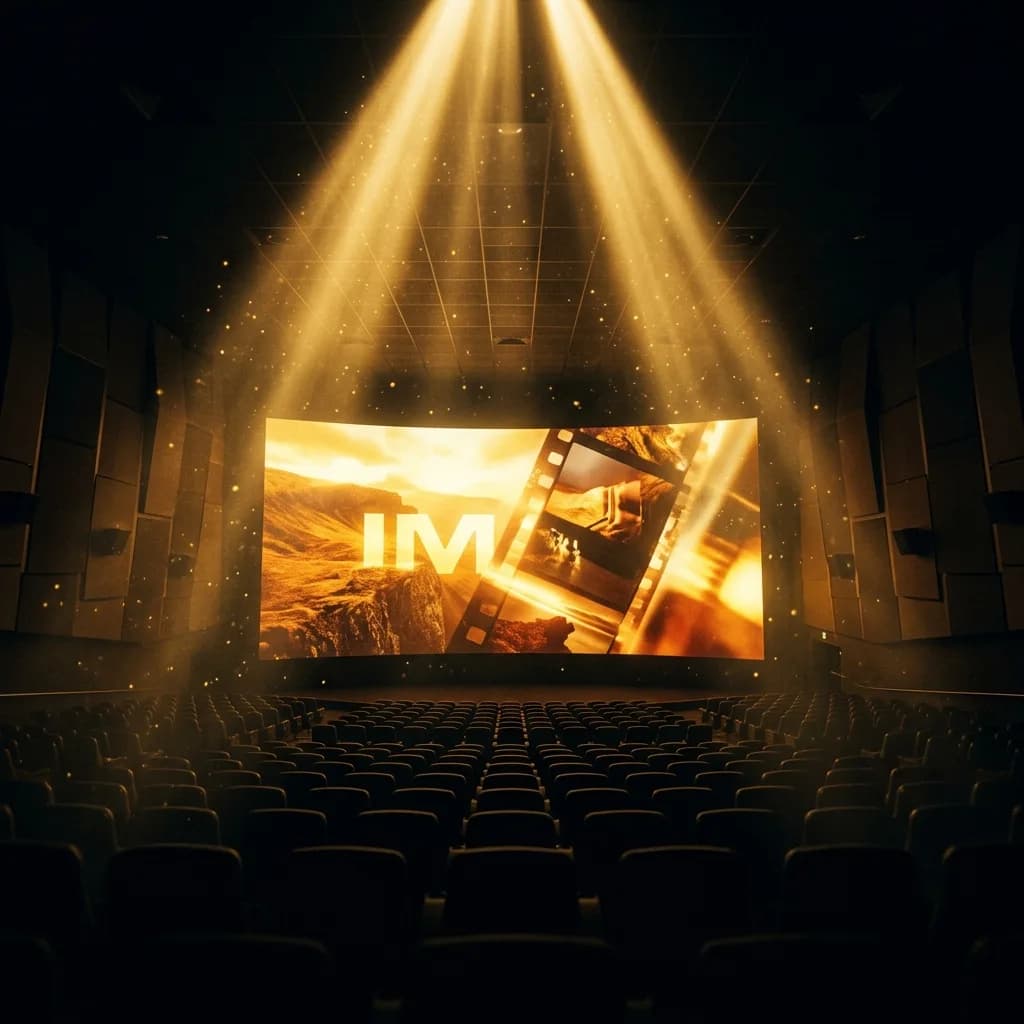
Understanding IMAX
Why does IMAX look so much better? What's the real difference between “filmed for IMAX” and “shot on IMAX film”? Why can 1080p look like 4K? And how big is a single movie file at the theater?
What is IMAX?
IMAX (Image Maximum) isn't just a bigger screen — it's an end-to-end system designed to create the most immersive visual experience possible. Every element is engineered together: the camera, the film stock, the projector, the screen geometry, and the sound system.
Founded in 1967 in Canada, IMAX originally used enormous 15-perf 70mm film — where each frame is 10× larger than standard 35mm cinema film. The film runs horizontally through the projector (like a conveyor belt), allowing for a much larger image area per frame.
💡 Key Insight
A single frame of IMAX 15/70mm film has roughly 18 billion pixels of information — that's equivalent to about 18K resolution. For comparison, your 4K TV displays about 8.3 million pixels.
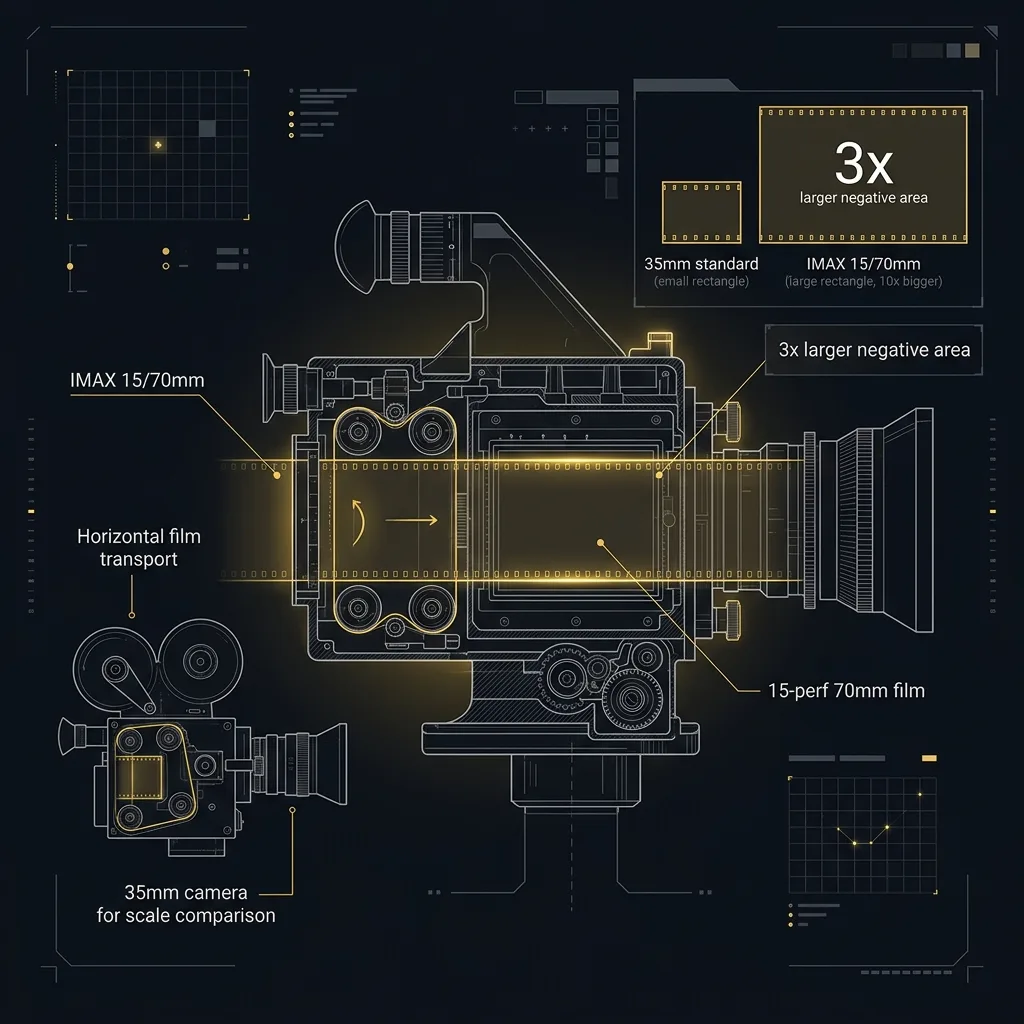
IMAX 15/70mm camera vs standard 35mm — note the horizontal film transport
IMAX 15/70mm
Film Projector
IMAX Laser
Dual 4K Laser
IMAX Digital
Dual 2K Xenon
Filmed FOR vs. WITH vs. ON IMAX
Not all “IMAX” movies are created equal. There are three distinct tiers of how a film can be associated with IMAX, and the difference is massive.
Filmed FOR IMAX
Most CommonIMAX DMR (Digital Media Remastering)
A standard movie (shot on 35mm or digital) is digitally remastered — color graded, sharpened, and sometimes cropped differently — to look better on IMAX screens. Think of it as an enhanced upscale.
Examples: The Avengers, Spider-Man: No Way Home, Doctor Strange 2
Filmed WITH IMAX Cameras
PremiumIMAX-Certified Digital Cameras
Shot using IMAX-certified digital cameras (like the ARRI Alexa IMAX or Panavision DXL2). The entire film is captured at higher resolution with IMAX-optimized lenses, delivering genuinely superior clarity and expanded aspect ratios.
Examples: Dune: Part Two, No Time to Die, Top Gun: Maverick
Shot on IMAX Film
The Holy Grail15-perf 70mm IMAX Film
The absolute pinnacle. Shot on massive 65mm / 70mm IMAX film with 15 perforations per frame — each frame is 10× the size of standard 35mm. This produces an image with a digital equivalent of ~18K resolution. Only a handful of directors still shoot this way.
Examples: Oppenheimer, Interstellar, Dunkirk, The Dark Knight
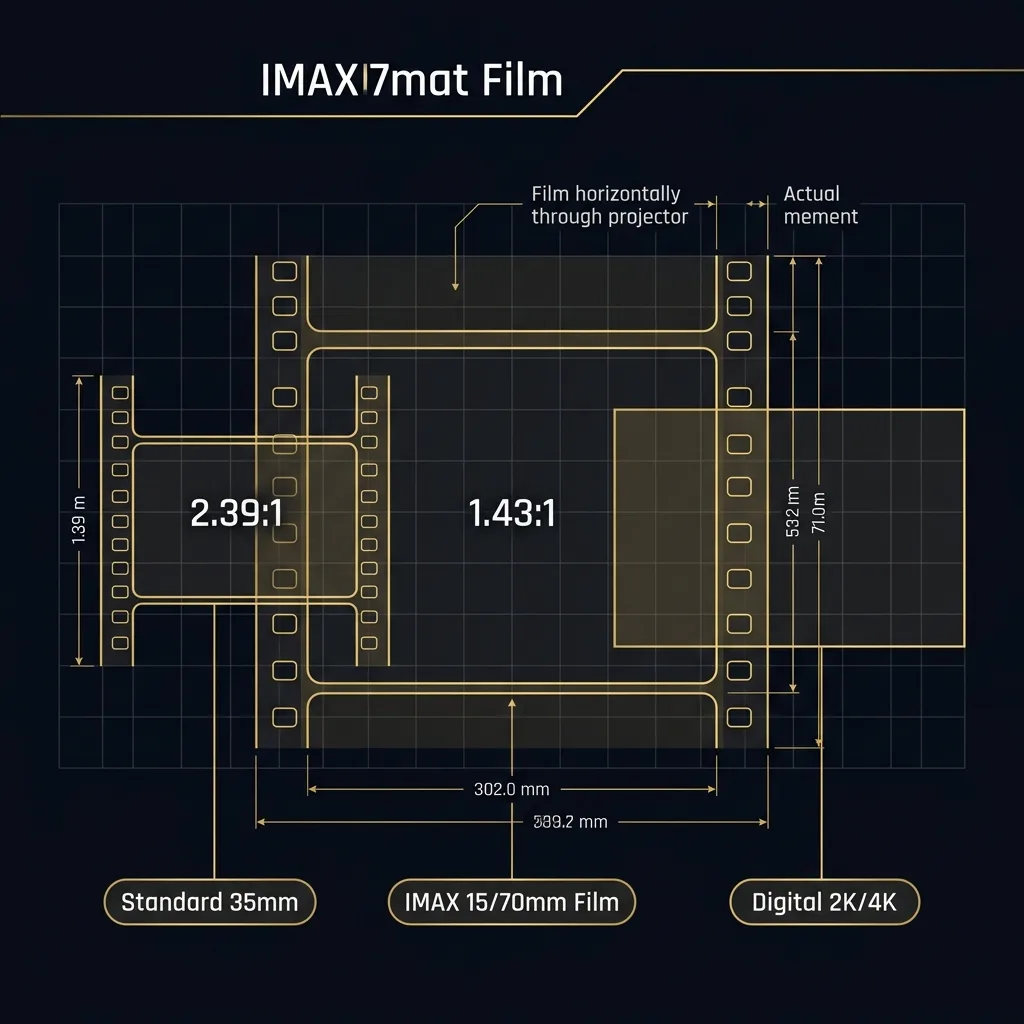
Frame size comparison: IMAX 15/70mm film uses 15 perforations running horizontally, creating a frame area approximately 10× larger than standard 35mm. This is why IMAX film captures an extraordinary amount of detail.
The IMAX Screen
IMAX screens aren't just wider — they're designed to fill your entire peripheral vision, creating a sense of true immersion that a standard screen can't match.
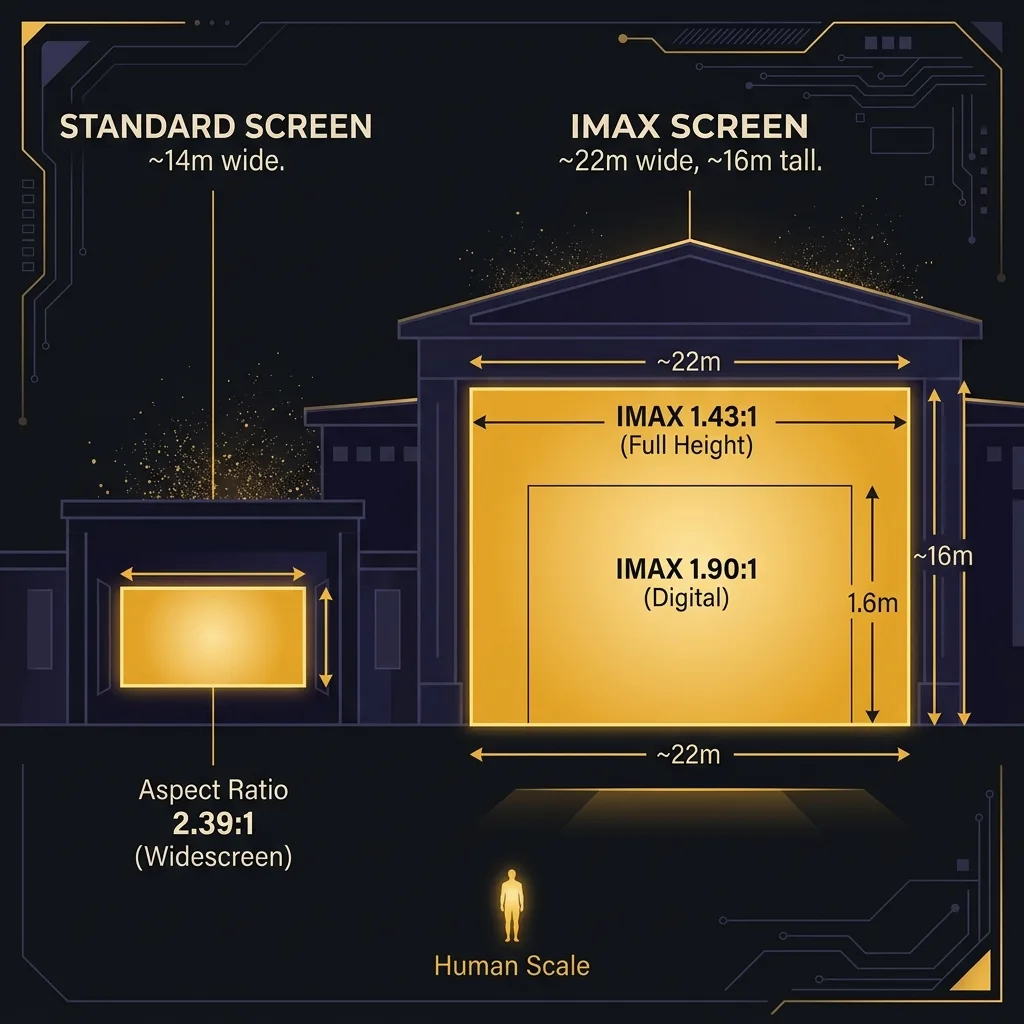
Aspect Ratios — What you actually see
The aspect ratio determines how much of the screen is used. A taller ratio means more image area and a more enveloping experience.
Up to 40% more image — When a film shot in IMAX 1.43:1 switches from standard widescreen scenes to IMAX sequences, the image literally “opens up” to fill the entire screen height. This is the famous “expanding frame” effect in films like Oppenheimer and Interstellar.
The Resolution Myth: Why 1080p Can Look Like 4K
Here's one of cinema's best-kept secrets: resolution is just the grid size. What actually determines image quality is how much data fills each pixel — and that's called bitrate.
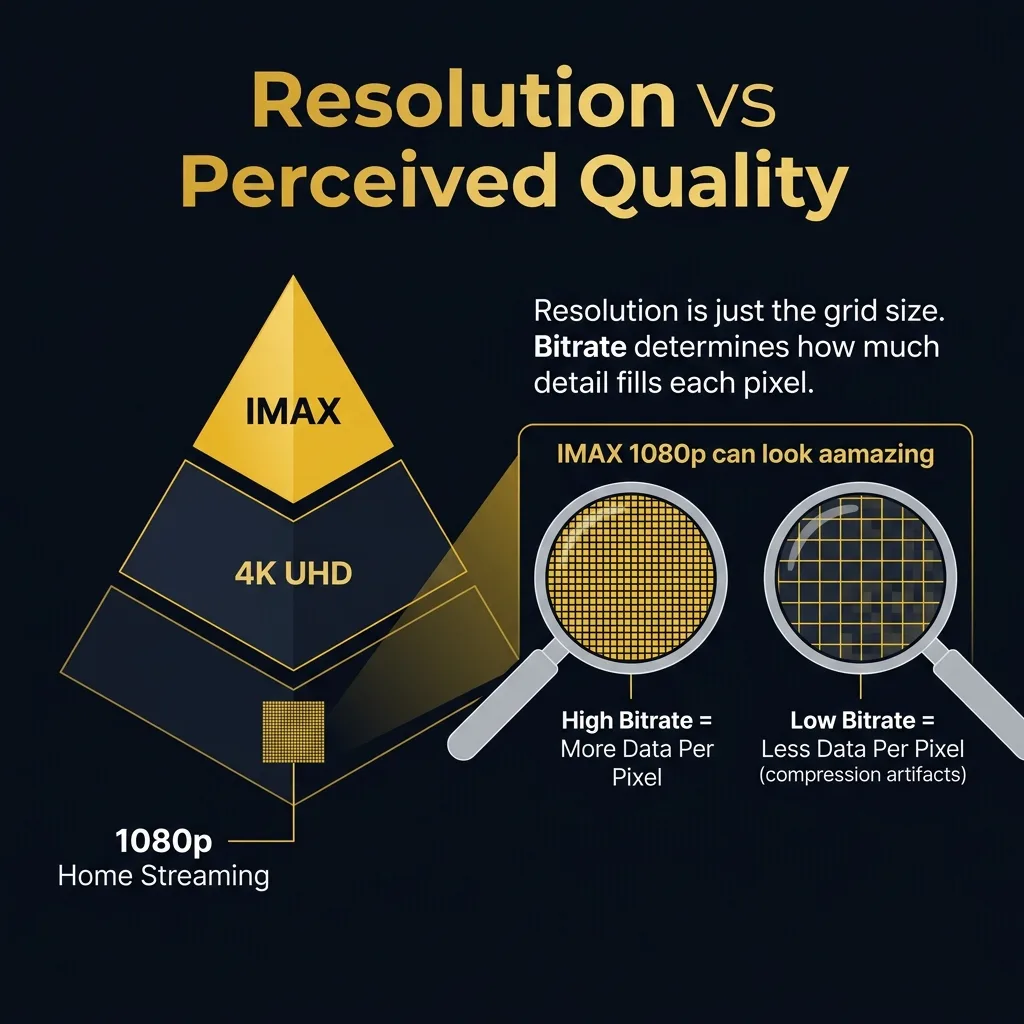
🔍 Think of it like a canvas
Resolution = how many dots you can place on the canvas.
Bitrate = how much paint you put into each dot.
A 1080p image at 250 Mbps has 50× more data per pixel than a Netflix 1080p stream at 5 Mbps. Each pixel is extraordinarily rich and accurate.
🎯 Why theaters don't need 8K
At cinema viewing distances (15–30 feet from a 60-foot screen), your eye physically can't resolve the difference between 4K and 8K. But it absolutely cansee the difference between high and low bitrate — that's why streaming artifacts (blocky gradients, mushy textures) are so noticeable.
⚡ The theater advantage
Digital Cinema Packages (DCPs) use JPEG 2000 compression— a format so high-quality it's essentially visually lossless. Even at 2K resolution, the bitrate is so high that every pixel is pristine. Combined with a massive screen and precision projectors, 2K DCP can look better than 4K streaming.
Bitrate: The Real Quality Metric
Bitrate measures how much data is used per second of video. Higher bitrate = more detail, smoother gradients, and fewer compression artifacts. Here's how different formats compare:
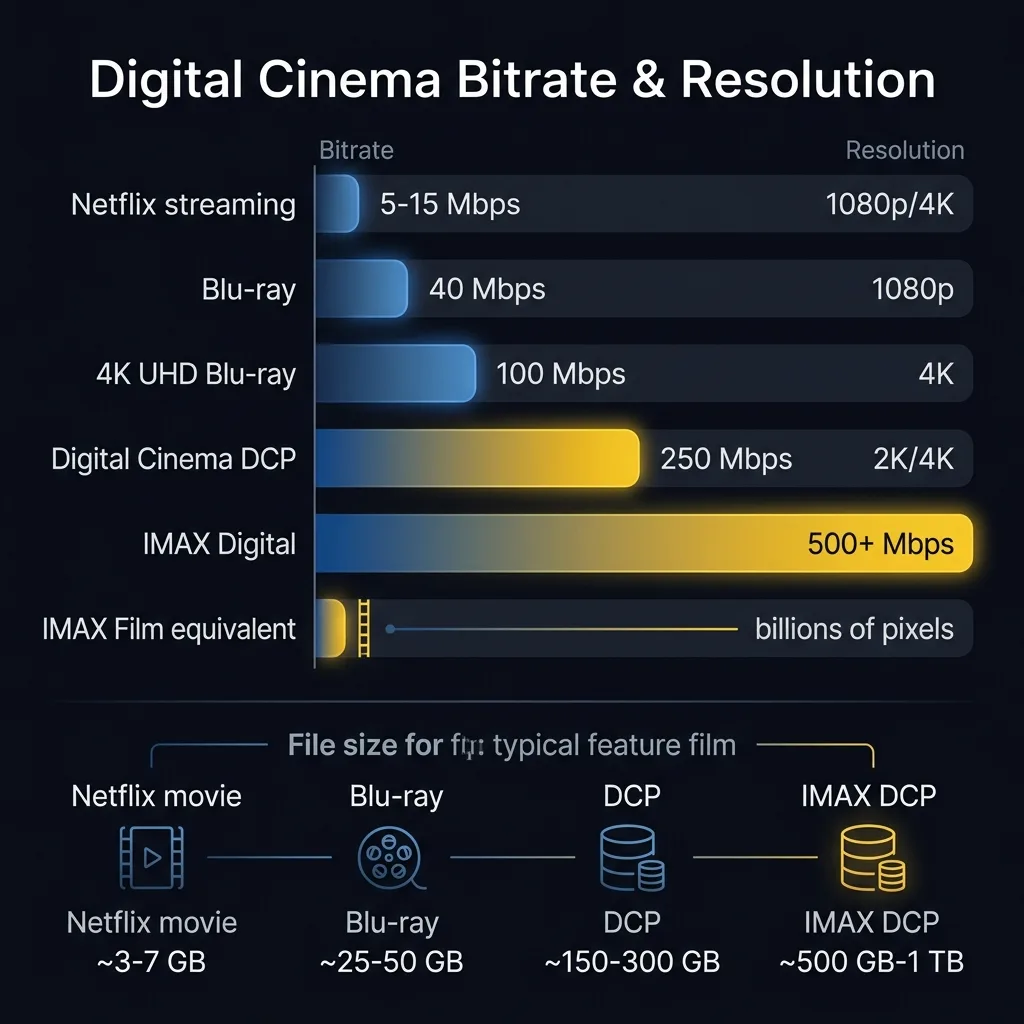
IMAX film has no fixed bitrate — it's analog. But when digitized, a single IMAX frame at full resolution contains around 12 gigapixels of data. At 24fps, that's roughly 12,000 Mbps of equivalent throughput.
Data per pixel comparison
Same resolution, massively different quality
Netflix 1080p
~0.08
bits per pixel
Blu-ray 1080p
~0.6
bits per pixel
Cinema DCP 2K
~4.5
bits per pixel
How Big Is a Movie at the Theater?
Theater movies aren't streamed — they're delivered on encrypted hard drives (called CRU drives) or via satellite. Here are the typical file sizes for a 2.5-hour feature film:
Netflix Movie
Heavily compressed H.264/H.265
3–7 GB
Blu-ray Disc
Lossless audio, high-quality video
25–50 GB
Cinema DCP
JPEG 2000, 2K or 4K, uncompressed audio
150–300 GB
IMAX DCP
Dual 4K streams, lossless, shipped on hard drives
500 GB – 1 TB
🚚 How movies get to theaters
Movies are distributed as Digital Cinema Packages (DCPs). A DCP contains the video (JPEG 2000 MXF files), audio (PCM WAV), subtitles, and a KDM (Key Delivery Message) for encryption.
For standard movies, DCPs are often sent via satellite or fiber. But for IMAX films — especially true IMAX 70mm prints — the physical film reels can weigh over 250 kg (550 lbs) and need to be shipped in custom flight cases.
An IMAX laser presentation uses two synchronized servers — each playing a 4K stream simultaneously, creating a dual-4K image that's brighter and more detailed than any single projector could achieve.
| Property | Standard | IMAX Digital | IMAX Laser |
|---|---|---|---|
| Resolution | 2K (2048×1080) | 2K×2 (dual) | 4K×2 (dual) |
| Brightness | 14 fL | 22 fL | 30+ fL |
| Contrast Ratio | 2000:1 | 3000:1 | 8000:1+ |
| Color Gamut | DCI-P3 | DCI-P3 | Rec. 2020 |
| Sound | 5.1 / 7.1 | 12-ch IMAX | 12-ch IMAX |
| DCP Size | ~200 GB | ~400 GB | ~1 TB |
⚡ Inside IMAX Laser Projection
Unlike standard xenon bulb projectors, IMAX with Laser uses a proprietary dual-laser engine that splits light into primary red, green, and blue laser arrays, combining them with precision prisms. This results in unprecedented brightness levels, a wider color gamut (Rec. 2020), and 8000:1 contrast ratios.
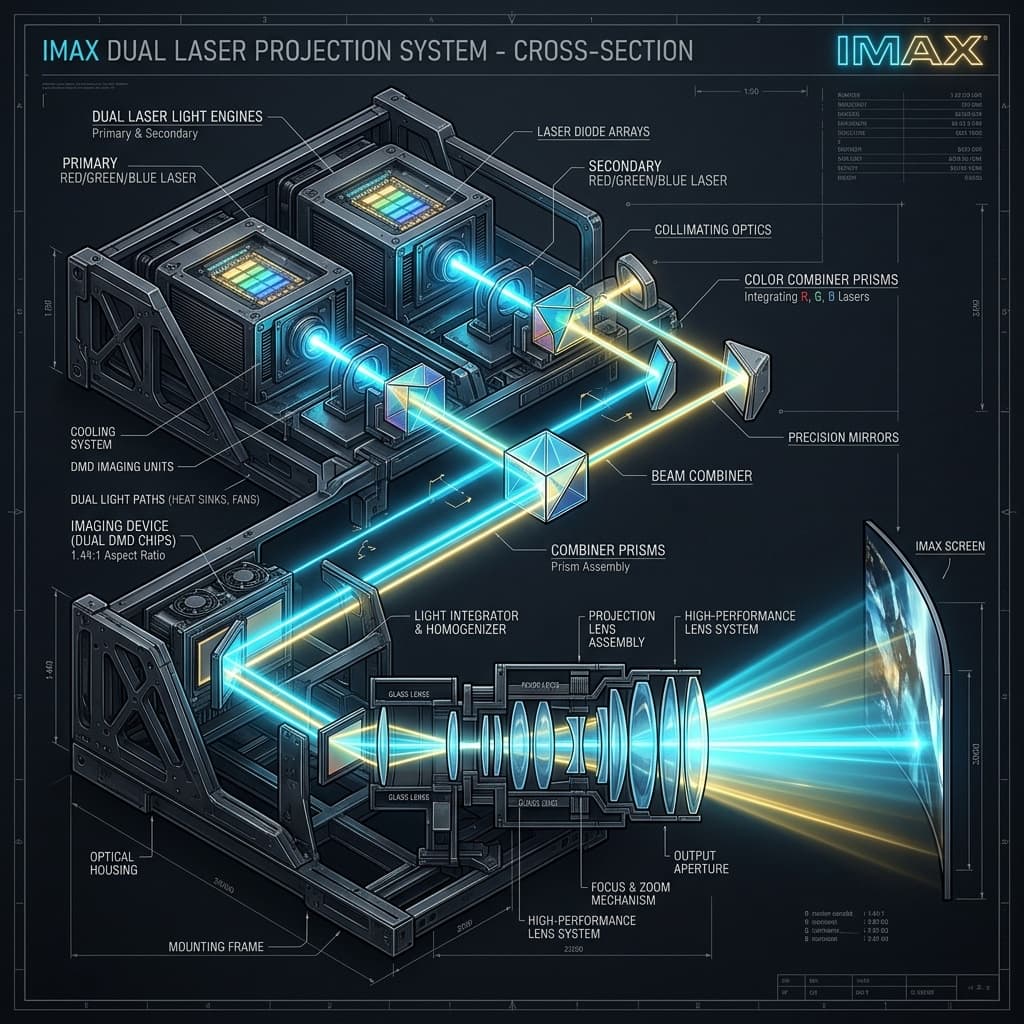
Diagrammatic representation of the dual-laser projection alignment and light integrator components.
Frequently Asked Questions
What is the difference between IMAX Digital and IMAX Laser?
IMAX Digital (xenon) retrofits standard theaters with dual 2K resolution lamps. IMAX with Laser uses advanced laser light engines to produce full native 4K resolution, 10 times the contrast, and nearly double the brightness, allowing it to fill giant GT screens.
What does 'Shot in IMAX' actually mean?
Historically, it meant shooting on massive 15/70mm physical film reels. Today, it means the filmmakers used high-end IMAX-certified digital cameras (like the ARRI Alexa IMAX). Only these sequences offer the taller expanded aspect ratios (1.43:1 or 1.90:1).
Is IMAX sound better than Dolby Atmos?
IMAX sound uses a custom 12-channel surround system centered on powerful subwoofers for physical bass. Dolby Atmos uses object-based sound with up to 64 speaker feeds including overhead channels. Dolby is more precise and directional, while IMAX is louder and more visceral.
Where should you sit for the best IMAX view?
You should sit in the center column, roughly two-thirds of the way back from the screen (usually rows 8 through 11). This gives you the perfect field of view to absorb the taller screen height comfortably without straining your neck.
Ready to find the best seat in the house?
Now that you understand the technology, use CinemaView to preview exactly how the screen looks from every seat — in IMAX, Dolby Cinema, ScreenX, and more.
Launch CinemaViewThis guide is for educational purposes. IMAX® is a registered trademark of IMAX Corporation.
Data sourced from IMAX technical specifications and industry publications.