dfle3
Written on 5/10/2025
The world's first full-length narrative feature film...what's left of it.
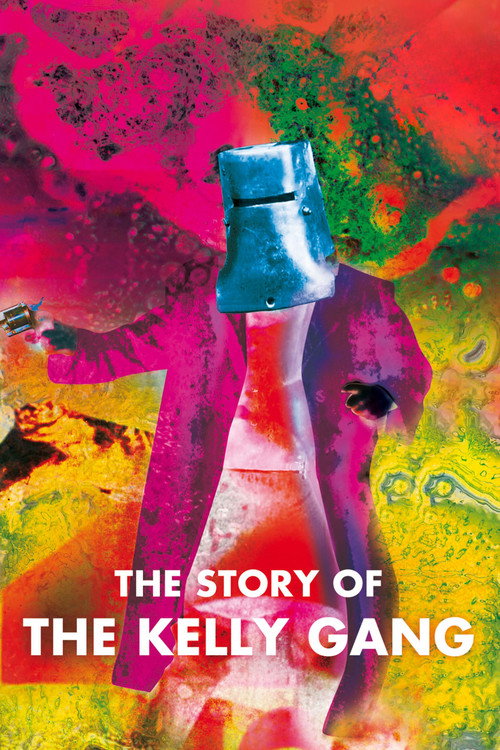
I saw this film on my EPG the other week and immediately decided to record it. It was broadcast on 27/04/2025 at 11:25pm on ABC TV. It's the story of Ned Kelly, Australia's most famous/iconic bushranger (a robber who commits crimes beyond populated areas). It should be noted that Australia was not yet a nation when he lived. Ned Kelly has been depicted many times in various forms of art and literature to this day.
Perhaps this was the film’s premier on any form of TV?. I viewed and reviewed most of it the next day. The remains of the film are bookended by NFSA notes at the start and its signage at the end. From the start of the former to the end of the latter, the running time of the broadcast is 31:50 minutes. The film proper would have a running time of 30 minutes from start of intertitles to the end of the last.
I’ll provide a selection of the notes on the broadcast which introduce the film below:
“This print is from the National Film and Sound Archive of Australia.
Introduction
The 1906 film The Story of the Kelly Gang is believed to have been one hour in length. Only fragments are known to survive.: 296m or 971 feet which totals almost fifteen minutes of screen time when projected at 18 frames per second.
This study version aims at reconstructing the film’s narrative based upon the best evidence provided by the original footage and intertitles. Combined with additional titles and other associated material, postcards, the poster, the original program booklet, a more complete sense of the structure of the original production is created...The original titles are shown as they are in the film. Reconstituted titles are based on text from the original program booklet (Melbourne, 1906) and appear in normal text.
Additional narrative titles have been created where no intertitles exist. They appear in italics to clearly distinguish them.”
A longish sequence of intertitles in italics begins proceedings before the film proper begins. Of the substantial live action sequences, there are four by my count:
1) Police at the Kelly homestead (1:16 minutes @)
2) The Kelly gang at the Wombat Ranges, the police at a camp nearby too (2:48@)
3) The Kelly gang at Younghusband’s station (8:24@)
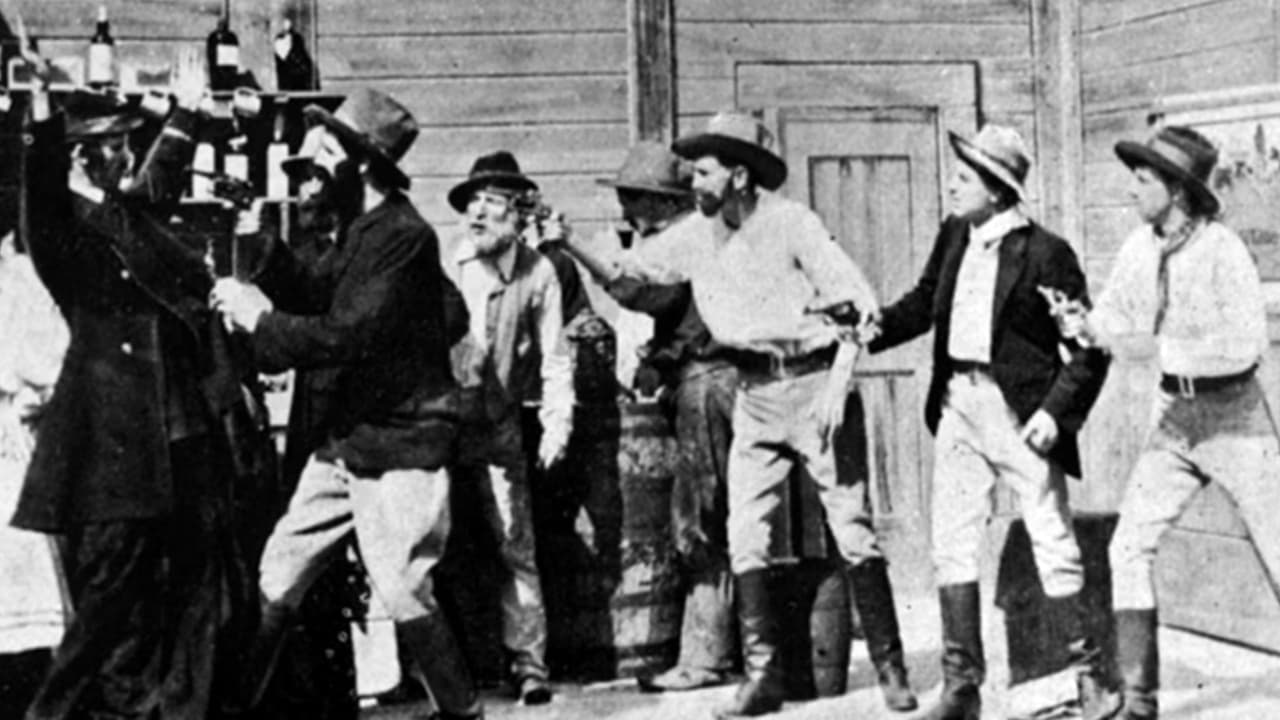
4) Sequence at the Glenrowan Hotel, interior and exterior (7:23@)
@ = from start of live action to end of live action but including intertitles with no live action. That’s a total of 19 minutes and 47 seconds of ‘actual’ film, not counting intertitles preceding the initial live action footage. Live action footage from these 4 sequences totals 1:06 (2 segments), 1:30 (4), 7:06 (10), 5:04 (13). So, the running time of all substantial live actions sequences is 14:48.
Now to the film itself. Assuming (perhaps wrongly) that the bookends of the live action sequences correspond to their place in the full version of the film (the final live action sequence seems likely to have ended the full film), it seems that the story starts in the middle of things: a policeman has an arrest warrant for Dan Kelly, Ned’s brother, at the Kelly homestead. Unless you are familiar with the story of the Kelly gang, you are left none the wiser as to what Dan is wanted for by the police. I certainly was.
There are a couple of other narratively confusing elements to the film:
Firstly, why did Dan and Steve shoot at each other inside the Glenrowan Hotel? I had the impression that “Steve” hadn’t been introduced to the audience and I couldn’t remember who he was. Skimming back to the start of the film, I did see that Steve was mentioned in the sequence set in the Wombat Ranges, where he was named as part of the Kelly gang. Looking online on a website concerning the Kelly gang, it isn’t certain what happened as far as Dan and Steve went (I skimmed the text), so the filmmaker look like they’ve taken liberties in what they’ve depicted as occurring. The actual live action depiction of the intertitles of what happened (“Steve and Dan shoot each other”) is utterly bizarre, as in there is no rhyme or reason for this. Ideally the full film would have made this event explicable by what has occurred before this moment, via the use of intertitles.
Secondly, Ned Kelly’s legendary armour just miraculously appears in the story. Perhaps the story of that armour and Ned’s use of it would have been common knowledge at the time the film was made but to the casual viewer, it just seems to materialise from out of nowhere. Again, ideally, the full film would have dealt with this in a way which makes more sense.
A nice touch to the film was the use of a red tint for the scene where the Glenrowan Hotel is alight. Presumably that was in the original film. I wondered whether the tint was to disguise that there was no visible flame on the building but looking closer, I could see flames at one point. That would be a novel yet natural cinematic trick for using tint.
Perhaps the film is having a bet each way as to how it is portraying the Kelly gang. One intertitle has the gang stating that “We do not rob ladies or children”. At the Younghusband’s station, the gang members are also seen to doff their hats to the ladies there! Perhaps the film leans on the side of being sympathetic to the gang, for instance, the first sequence with the policeman at the Kelly homestead. One intertitle reads “Disguised in their borrowed clothes” but we know that the gang has stolen the clothes from their hostages.
Maybe I should have mentioned this earlier but there is no sound at all to this silent film...perhaps this film predated the use of music to accompany the images? Another thing is that the action in the film sequences plays at normal speed. I’ve seen early 20th century films in clips and it always looks like the reel is being played too fast, say double speed or something of the sort. It’s nice to see the action take place at a normal speed. The NFSA intertitle mentions the film being projected at 18 frames per second...I wonder what the rate was for this contemporary broadcast in order to make it appear normal speed...and whether the original frame rate also played the action at a normal speed.
One very big issue to note is that some sections of the film are so deteriorated that they are unwatchable and the image quality can change in the space of one scene. From my point of view, I wonder whether AI could be used now to fix that damage without entirely manufacturing the scene from inference or whatever it is that AI can do. A further step would be to create from scratch missing scenes which could correspond to intertitles which the NFSA mentions in their note.
Some random notes:
^ Two Aboriginals are in the film, appearing as trackers. They didn’t look happy to be there. I wonder if there is a story behind that.
^ There are some tiny fragments of live action which I haven’t counted in my list before. Maybe it’s on an equivalent website to this that a reviewer or reviewers have pointed out that there are scenes in the film we now have which were actually outtakes or some such of the original and not included. Perhaps the scene of a woman riding sidesaddle is an example of that. It looked like she had a smile on her face (on a still, at least), so perhaps that footage was never intended for the original release. It was impressive to see her mount jump a small fence with her on it. Whether the women who associated with bushrangers rode sidesaddle is one which intrigues me. Perhaps they didn’t?
^ £8,000 reward for the gang’s capture poster...that’s 1870s money...what would that be in today’s money? The Brave search engine AI suggests that it would be A$1,270,396.80, via UK inflation data as Australia didn’t have its own CPI until 1922. I input the poster amount for the year 1879, which I’m not sure is right but it’s close enough, I’d say.
^ The hawker’s van had this signage on it: “Hawker on sale drapery, clothing, cutlery, boots, shoes, books, tobacoo, cigars & pipes &c” (that last ‘word’ is my best guess for the writing, as in it’s short for “etc.”). The hawker did a good job of reversing his horse!
^ An extremely odd bit of acting is done by the man playing the policeman in the Wombat Ranges sequence...right before we move to the Younghusband’s station. He was melodramatically fruity, one might say. What was he aiming for? Of course, later films would have highly kinetic and larger than life gesturing, as this one does. Still, passing strange mannerisms by him.
^ One man cops a knee up the bum, which looked real...and painful!
^ Moustaches and hats are the order of the day for the men.
^ The cinematographer seems to want to include all the actors in the same shot, which does make the scene look implausible.
^ Italicised intertitles were ambiguous in the hostage situation.
N.B. I haven't scored this film as most of it is lost to history, unfortunately.
en.wikipedia.org/wiki/The_Story_of_the_Kelly_Gang
“In 2007, The Story of the Kelly Gang was inscribed on the UNESCO Memory of the World Register for being the world's first full-length narrative feature film”.