The Short Answer
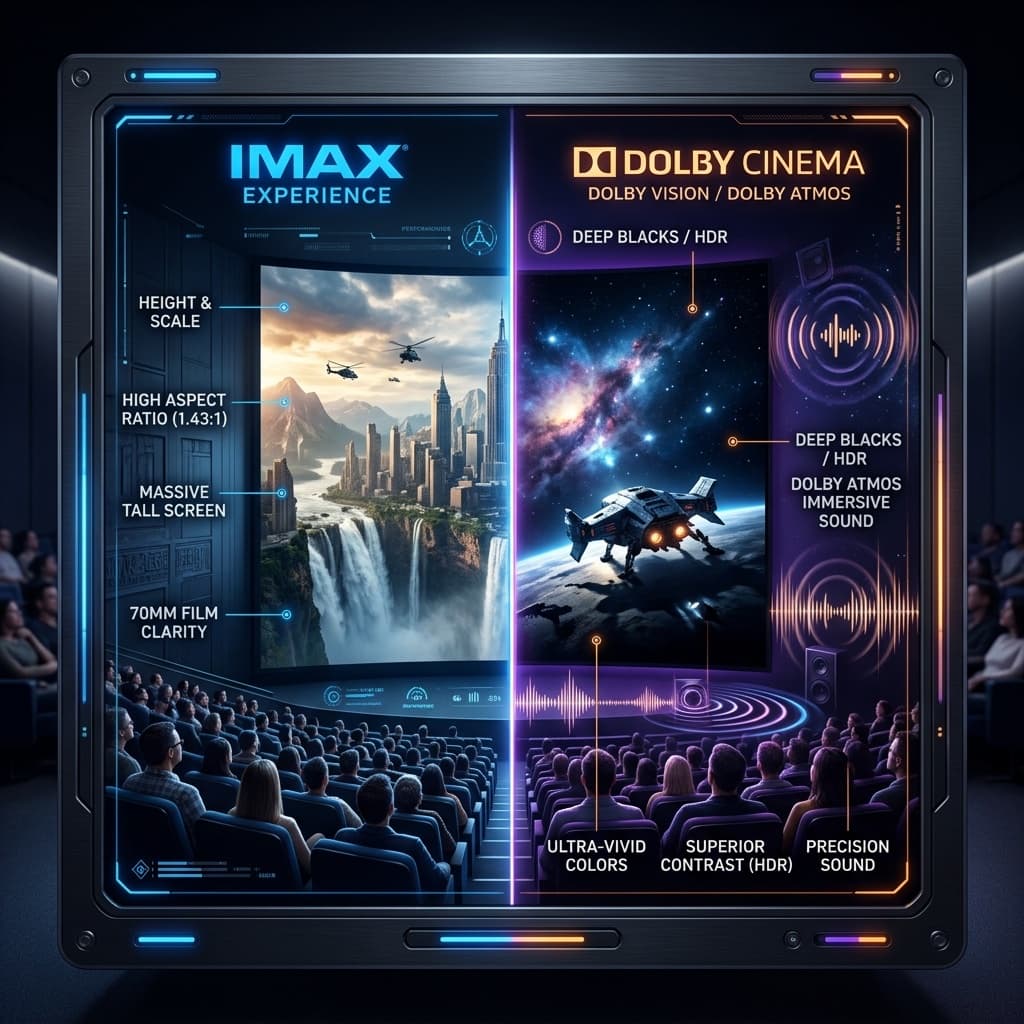
IMAX is best for sheer scale — the biggest, most enveloping picture you can get. Dolby Cinemais best for picture precision — deeper blacks, higher contrast, and object-based surround sound. Neither is universally “better” — it depends on the movie and what you value.
Screen Size and Aspect Ratio
IMAX screens are significantly larger. A true IMAX GT screen can measure 22–29 metres wide and 16+ metres tall at a 1.43:1 aspect ratio. Dolby Cinema screens are typically 14–18 metres wide at a standard 2.39:1 widescreen ratio. Learn more about screen comparisons in our Movie Screen Size Guide.
When a film has IMAX-formatted sequences, the picture literally expands to fill the taller screen — you see up to 40% more image than in a standard showing. Dolby Cinema does not expand the frame but delivers higher peak brightness and deeper blacks within the standard ratio. Check industry specs via SMPTE Standards.
Picture Quality
IMAX Laser: Dual 4K laser projectors, 30+ foot-lamberts brightness, 8000:1 contrast ratio, Rec. 2020 colour gamut. Excellent, but Dolby edges it on contrast. Read a deep dive in our Ultimate IMAX Guide.
Dolby Vision HDR: Dual 4K laser projectors with up to 108 nits peak brightness (vs IMAX at 22 nits), contrast ratio exceeding 1,000,000:1 thanks to the ability to produce absolute black. Dolby Cinema is the clear winner for HDR content.
Sound Systems
IMAX: 12-channel surround sound with floor-mounted subwoofers designed to create a visceral low-frequency experience. Excellent for action movies.
Dolby Atmos: Object-based audio with up to 64 speaker feeds including ceiling speakers. Individual sounds can be placed and moved anywhere in 3D space. Superior for nuanced, directional audio and immersive soundscapes.
Seating Comparison
IMAX auditoriums are larger with more seats, giving a wider range of “good” positions. However, the sweet spot is narrower in percentage terms because the screen is so large.
Dolby Cinema halls are smaller and more intimate. The best seat window is narrower in absolute terms but proportionally more of the seats deliver a good experience. Learn the science of seating in our Best Cinema Seat Guide.
Compare both: Best IMAX seat | Best Dolby Cinema seat
Which Format for Which Movie?
- Action / sci-fi blockbusters: IMAX, especially if the film has IMAX-formatted sequences.
- Dark, atmospheric films: Dolby Cinema for the superior blacks and HDR contrast.
- Music-heavy films: Dolby Cinema for the Atmos object-based audio precision.
- Nature documentaries: IMAX for the sheer scale and enveloping picture.
Compare Both in CinemaView
Use CinemaView to switch between IMAX and Dolby Cinema from the same seat and see exactly how each format changes the picture. The scoring engine adjusts for screen size, aspect ratio, and speaker placement, giving you a fair comparison.