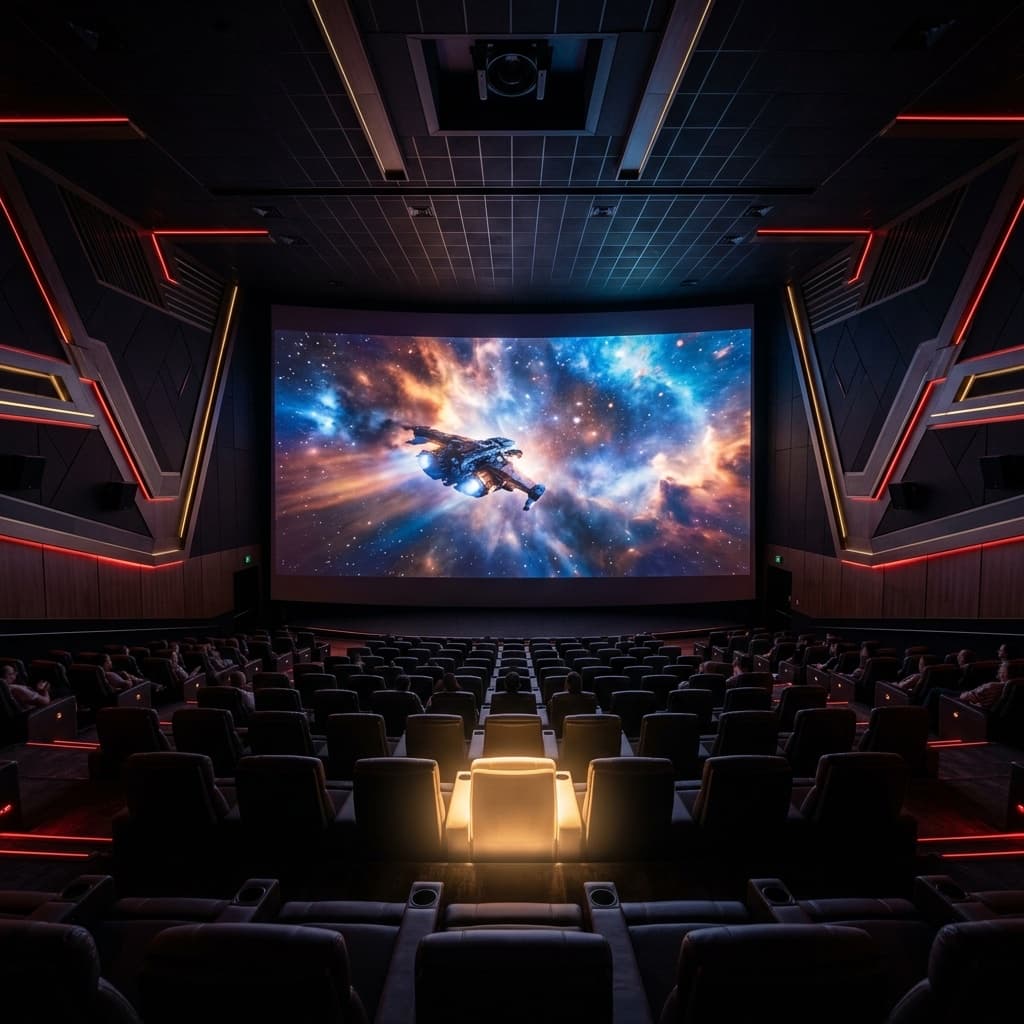
Why IMAX Seating Matters More Than You Think
IMAX is not just a bigger screen — it is an end-to-end system designed to create the most immersive visual experience possible. The screen geometry, speaker placement, and projector alignment are all engineered together. This means where you sit in an IMAX theater has a bigger impact on your experience than in a standard cinema.
A true IMAX screen runs at a 1.43:1 aspect ratio and can measure over 22 metres wide and 16 metres tall. At that scale, the front rows can leave you craning your neck upward, while the back rows reduce the massive screen to a fraction of your field of view. The sweet spot is narrower than in a standard hall, making seat choice critical. Learn more about cinema dimensions in our official Movie Screen Size Guide.
The Best IMAX Seat Position
The consistently highest-scoring IMAX seat is in the centre of the upper-middle section — roughly two-thirds of the way back from the screen. In a typical 15-row IMAX auditorium, this means rows 8 through 11, centred on the middle column.
This position delivers the optimal balance of three key factors:
- Viewing angle: The screen fills 50–70% of your horizontal field of view — the IMAX sweet spot where the picture envelops you without requiring head movement. This aligns with standard cinema science discussed in our Cinema Viewing Angle Guide.
- Vertical comfort: Enough distance that you can see the top of the screen without tilting your head, avoiding neck strain during a 2+ hour film.
- Audio balance: Centred in the 12-channel IMAX surround sound field, where directional audio objects are placed correctly around you.
IMAX Seat Guide by Screen Type
IMAX GT Flagship
The largest IMAX screens (26–29 metres wide). Sit further back — rows 10–13 in a large auditorium. The screen is so massive that even row 12 delivers an immersive 60+ degree viewing angle. The centre column is essential here because the curved screen geometry means off-centre seats lose peripheral coverage. Check details on the official IMAX Website.
IMAX Laser / GT
Mid-size IMAX screens (22–26 metres). Rows 8–11 centre are ideal. IMAX Laser projection is the brightest available, so even slightly off-centre seats retain excellent contrast and colour accuracy.
IMAX Digital (Commercial)
Smaller retrofitted IMAX screens (15–18 metres). Because the screen is closer to standard cinema size, the best seat moves forward slightly — rows 6–9 centre. The dual 2K xenon projectors are dimmer than laser, so staying closer helps maintain brightness perception.
Seats to Avoid in IMAX
- Front 3 rows: Extreme neck tilt, distorted geometry, and the picture extends beyond your peripheral vision.
- Last 2 rows: The screen shrinks below 30% of your field of view, negating the IMAX premium. Compare this with standard seats in our Best Cinema Seat Guide.
- Far side seats: The curved screen creates uneven brightness and audio imbalance from the edges.
Preview Your IMAX Seat with CinemaView
Instead of guessing, use CinemaView to see exactly how the screen looks from any seat. Select IMAX in the format panel, choose your screen variant (Laser, GT Flagship, GT Compact, or Commercial), and click any seat to fly into first-person view. The built-in scoring engine highlights the best seat automatically. Read our complete IMAX technology guide for more about how IMAX works, or compare IMAX vs Dolby Cinema to decide which format deserves your ticket money.